Content1. Mold Bases & Inserts (What They Are)2. Market Size (Proxies & Context)3. Typical U...
How to Choose the Right Mold Bases and Inserts for Your Project
2026-03-12
Content
1. Mold Bases & Inserts (What They Are)
2. Market Size (Proxies & Context)
4. Competitor Landscape (Mold Bases, Inserts, and the Tooling Ecosystem)
5. Key Trends & What They Mean for Mold Bases and Inserts
Mold bases provide the structural frame; inserts define the part geometry. Together they sit at the capital-intensive end of injection molding and die casting — and they’re being reshaped by modular standards, additive manufacturing, and smart control systems.
Mold Bases & Inserts (What They Are)

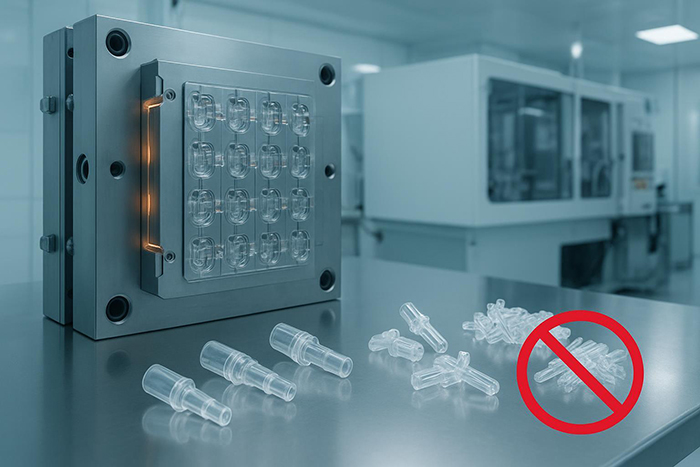
In the world of high-volume manufacturing, particularly within injection molding and die casting, the efficiency and quality of the final product are inextricably linked to the precision of the tooling. At the heart of this tooling are mold bases and mold inserts. A mold base serves as the fundamental frame or "skeleton" of the mold assembly, providing the structural support and housing for the internal components. It typically consists of a series of stacked steel plates—such as the top clamping plate, cavity plate, core plate, and ejector plates—held in precise alignment by leader pins and bushings.
Complementing the base are mold inserts, which are the specific, often replaceable components that contain the actual geometry of the part to be molded. While the mold base provides the generic structure and mechanical functions (like cooling and ejection), the inserts define the "cavity" and "core" that shape the molten material. This modular approach is critical for several practical reasons:
Reduced Lead Time: By using standardized mold bases, manufacturers can begin work on the frame while the specific part geometry is still being finalized, significantly accelerating the tool-build process.
Cost Efficiency: Standardizing the outer frame allows tool shops to focus their high-precision machining efforts on the inserts rather than the entire block of steel.
Interchangeability and Maintenance: If a part design changes or a specific area of the mold wears down, only the insert needs to be replaced or modified, rather than the entire mold assembly.
Standardization: Industry standards like those from DME or HASCO ensure that components from different suppliers can be integrated seamlessly, providing global sourcing flexibility.
Market Scope Note:
Readers should note that published market research data rarely isolates "mold bases" or "inserts" as standalone global categories. Instead, these are reported as sub-segments within broader industrial classifications. This report utilizes data from the Global Industrial Mold Market (encompassing injection, blow, and compression molds) and the Die and Mould Market (which includes die-casting and stamping tools) as proxies to understand the scale and health of the mold base and insert sector.
Market Size (Proxies & Context)
The mold base and insert market is a vital subset of the broader industrial tooling landscape. While specific figures for just the base frames are less common, the performance of the parent industries provides a clear trajectory for demand. According to research from Market Data Forecast, the global industrial mold market reached a valuation of USD 54 billion in 2024. This market is projected to grow to USD 59 billion in 2025 and is expected to climb significantly to USD 119.73 billion by 2033, representing a CAGR of 9.25% during the forecast period.

Complementary data from Strategic Market Research indicates that the "die and mould" market specifically was valued at USD 15.7 billion in 2024, with projections reaching USD 25.12 billion by 2030. Furthermore, specialized data on metal molds for plastic injection molding—the primary application for standard mold bases—estimates a market value of USD 4.5 billion in 2022, growing to approximately USD 6.5 billion by 2032, according to analysis from Thomasnet.

Market Segment | 2024 Value (USD) | Future Forecast (USD) | Source |
|---|---|---|---|
Global Industrial Mold Market | $54.0 Billion | $119.73 Billion (2033) | |
Global Die and Mould Market | $15.7 Billion | $25.12 Billion (2030) | |
Metal Molds for Plastic Injection | $4.5 Billion (2022) | $6.5 Billion (2032) |
For manufacturing managers, these numbers imply a robust and expanding environment. The rapid growth in the broader industrial mold market—nearly doubling in value over the next decade—suggests an increasing complexity in part design and a greater reliance on high-cavitation, high-precision tooling.
As global production volumes rise, the demand for standardized mold bases and high-performance inserts will grow proportionally to support faster tool builds and reduced downtime.
Typical Users & Use Cases
The purchasing and utilization of mold bases and inserts vary significantly depending on the organization's position in the supply chain. Understanding these segments is key to identifying market needs and service expectations.

Moldmakers & Tool Shops: These are the primary buyers of standard mold bases. They purchase "off-the-shelf" frames from suppliers like LKM or HASCO to serve as the foundation for their custom tool builds. Their key criteria are lead time and machinability.
OEMs with In-House Tooling: Large brand owners (e.g., in automotive or electronics) often maintain internal tool rooms. They focus on standard compatibility across their global manufacturing sites to ensure that a tool built in one region can be maintained in another.
Injection Molders / Contract Manufacturers: While they may not build the mold, they manage its lifecycle. They frequently purchase replaceable wear parts and precision inserts to maintain production quality over millions of cycles.
Maintenance & Repair Shops: These specialists focus on extending tool life. They buy plates, bushings, and inserts to refurbish aging molds, where tolerances and material quality are paramount.

Application Snapshot by Industry
The demand for these components is driven by several high-growth end-user sectors, each with unique requirements for their mold inserts and bases:
Automotive & EV: According to Market Data Forecast, the EV surge is a major driver. Large-scale molds are required for battery housings and lightweight structural components. This has led to the rise of concepts like gigacasting, which uses massive die-casting mold bases.
Medical Devices: This sector requires ultra-precision micro-inserts with extremely tight tolerances for miniaturized surgical tools and diagnostics. Material purity and biocompatibility of the mold steels are critical Strategic Market Research.
Consumer Electronics: High-cavitation molds with rapid cycle times are standard here. Precision inserts with advanced cooling are necessary to maintain the cosmetic finish and dimensional stability of thin-walled enclosures.
Packaging: This industry relies heavily on "Master Unit Die" (MUD) or quick-change concepts, where the mold base remains in the machine while only the inserts are swapped to produce different part variations.
Competitor Landscape (Mold Bases, Inserts, and the Tooling Ecosystem)
The competitive environment for mold bases and inserts is a multi-tiered ecosystem ranging from global giants providing standardized components to local specialized shops and auxiliary equipment providers.


Competitor Category | Key Players | Core Value Proposition |
|---|---|---|
Standard Mold Base Suppliers | DME, HASCO, LKM, Futaba, Meusburger, MISUMI | Global availability, standardized CAD libraries, high-volume consistency. |
Custom Mold Base Manufacturers | Local precision machine shops, LKM Custom Division | Bespoke plate configurations, specialized materials (e.g., stainless), fast local delivery. |
Insert Material & Specialty Providers | PCS Company, Copper alloy specialists | High-thermal conductivity materials, precision ground inserts for high-wear areas. |
Adjacent Tooling Ecosystem | Topower, Yudo, Mold-Masters | Critical support equipment: hot runner controls, heaters, and sensors that integrate with the mold. |
Company Snapshots
DME: An industry pioneer known for establishing the first mold base standards. Their portfolio includes the "A" and "B" series bases which are used globally as a benchmark for compatibility.
HASCO: A German leader in modularity. Their "K-standard" system is widely adopted in Europe and focuses on simplifying mold design through high-precision, interchangeable components.
Lung Kee Group (LKM): Based in Hong Kong, LKM is one of the world's largest manufacturers of mold bases by volume. They offer both standard frames and extensive custom machining capabilities through their massive facilities in China.
Futaba: A Japanese powerhouse providing high-quality mold bases and precision plates, often preferred for high-tolerance applications in the electronics sector.
Meusburger: Specializes in high-quality steel plates and standard components, emphasizing "stress-relief" heat treatment to ensure dimensional stability during machining.
Spotlight: The Adjacent Tooling Ecosystem
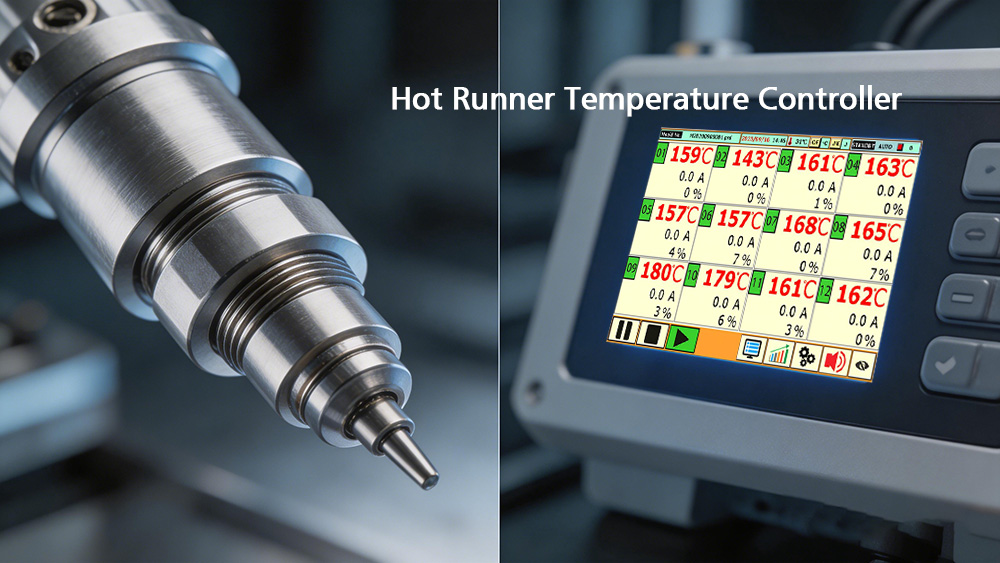
Modern mold design goes beyond just steel plates. The "adjacent ecosystem" includes providers of critical control systems that reside within or alongside the mold base. A prominent example is Topower Electronic Technology (cntopower.com), which specializes in hot runner temperature controllers and time sequential controllers.
While companies like Topower do not manufacture the mold bases themselves, their products—such as the TP series hot runner controllers and various heaters and accessories—are essential for the operation of high-performance molds. These systems ensure that the molten plastic remains at the correct temperature as it flows through the mold base into the cavities, a process that is critical for part consistency and waste reduction. By providing precise control over the heating elements within the mold, suppliers like Topower allow molders to maximize the efficiency of their tool assemblies.
Key Trends & What They Mean for Mold Bases and Inserts
The mold base industry is currently undergoing a period of rapid technological evolution, driven by the need for higher productivity and the integration of digital manufacturing principles.
Additive Manufacturing
3D-printed inserts with conformal cooling channels are revolutionizing cycle times. These channels follow the part's shape, which is impossible with traditional drilling Thomasnet.
Industry 4.0 & Sensors
The adoption of smart molds equipped with pressure and temperature sensors is increasing, particularly in Europe, to enable real-time process monitoring Market Data Forecast.
Gigacasting Demand
The shift toward EVs requires massive, high-tonnage mold bases for die-casting large structural parts like the "Giga Press" components used by Tesla Market Data Forecast.
Several other critical trends are shaping the strategic decisions of tool builders and manufacturers:
Sustainability and Energy Efficiency: There is a growing focus on reducing cycle times and material waste. Advanced hot runner systems, supported by precise controllers from companies like Topower, play a vital role here. By eliminating cold runners and maintaining stable thermal profiles, these systems significantly reduce the carbon footprint of the molding process.
Skilled Labor Shortage: The industry faces a critical shortage of experienced mold makers and designers Market Data Forecast. This is accelerating the adoption of standardization and automation in the tool build process. Using pre-machined, standardized mold bases from suppliers like DME or HASCO allows shops to operate effectively with fewer specialized technicians.
Modular & Quick-Change Concepts: To handle shorter product lifecycles, molders are increasingly using modular bases that allow for fast insert changeovers without removing the entire tool from the press. This flexibility is essential for "High-Mix, Low-Volume" manufacturing environments.
In summary, while the mold base and insert market is often seen as a traditional sector of heavy industry, it is currently at the center of advanced manufacturing trends. The integration of high-performance steel, additive manufacturing, and sophisticated control ecosystems (exemplified by the hot runner solutions from Topower) is transforming these "metal blocks" into intelligent, high-efficiency production systems.
NEXT:no more