Content1. Mold Bases & Inserts (What They Are)2. Market Size (Proxies & Context)3. Typical U...
Touch Screen vs PLC Temperature Controller: Which Is Better for Multi-Zone Control?
2026-01-23
Introduction
In modern injection molding operations, accurate and stable temperature control is no longer optional — it is essential for product quality, cycle time optimization, and material efficiency. This is especially true for hot runner systems, where temperature deviations of just a few degrees can result in defects such as short shots, stringing, burn marks, or material degradation.
As molds become more complex and multi-cavity designs increasingly common, manufacturers face a critical decision:
Should you use a touch screen temperature controller or a PLC temperature controller for multi-zone hot runner control?
Both solutions are widely used in the industry, yet they serve different production needs, automation levels, and user profiles. This article provides a clear, engineering-focused comparison to help mold designers, process engineers, and purchasing managers choose the most suitable solution.
Understanding Multi-Zone Temperature Control in Hot Runner Systems
A multi-zone temperature control system independently regulates the temperature of multiple heating zones within a hot runner mold, including:
Manifold zones
Nozzle zones
Gate and tip heaters
Each zone requires:
Precise temperature sensing (thermocouples)
Fast response heating control
Stable output under continuous operation
As the number of zones increases (8, 16, 32, or even 120+ zones), the control strategy and interface design become increasingly important.
What Is a Touch Screen Temperature Controller?
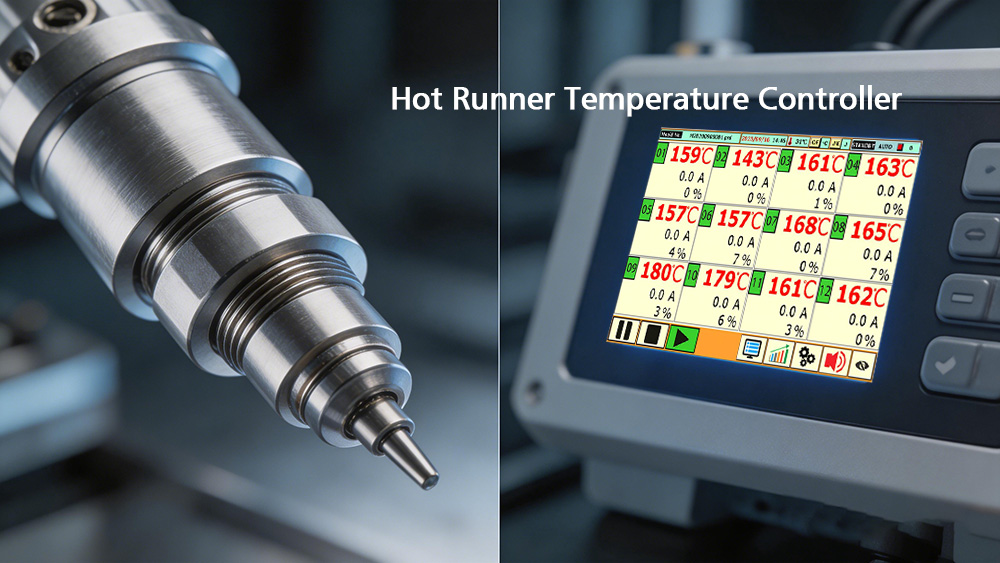
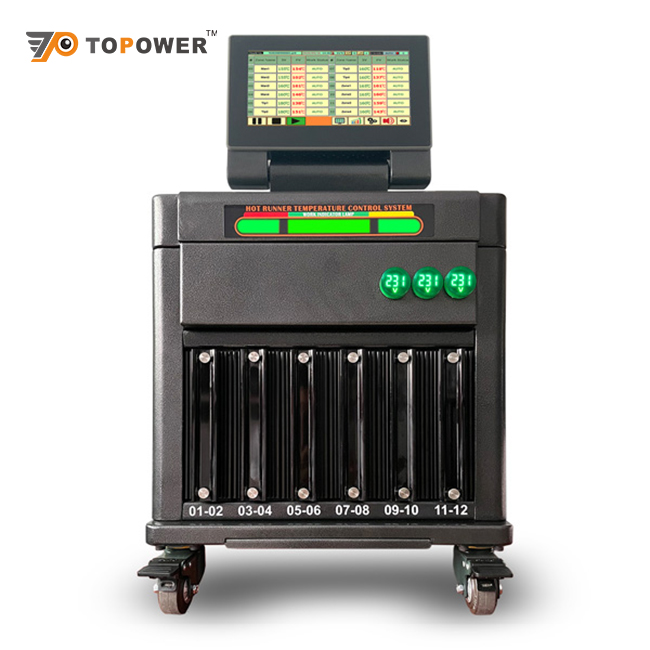
A touch screen temperature controller is a dedicated, all-in-one device specifically designed for hot runner systems. It typically integrates:
Multi-zone temperature control modules
PID control algorithms
Alarm and diagnostics functions
Touch-based HMI (Human-Machine Interface)
Key Characteristics
Designed exclusively for hot runner applications
Plug-and-play installation
Visual temperature overview for all zones
Minimal external programming required
Touch screen controllers are widely used in mold shops, contract molders, and production lines where speed, clarity, and ease of use are priorities.
What Is a PLC Temperature Controller?
A PLC (Programmable Logic Controller) temperature control system uses a PLC as the core control unit, combined with:
Temperature input modules
Output modules (SSR or thyristor control)
External HMI or SCADA interface
PLC temperature controllers are part of a broader automation architecture, often integrated with injection molding machines, robots, conveyors, and MES systems.
Key Characteristics
Highly customizable logic and control
Suitable for complex automation environments
Requires programming and system integration
Typically higher initial engineering cost
Interface & Usability: Touch Screen vs PLC
Touch Screen Temperature Controller
Intuitive graphical interface
Real-time temperature curves and zone status
Color-coded alarms for quick troubleshooting
Operators can learn in minutes
This makes touch screen controllers ideal for:
Frequent mold changes
Multi-shift production environments
Facilities with limited automation engineers
PLC Temperature Controller
Interface depends on HMI design
More flexible, but less standardized
Requires trained personnel to modify logic or screens
While powerful, PLC systems often involve higher training costs and slower on-site troubleshooting.
Control Accuracy and Stability
Both touch screen and PLC temperature controllers can achieve high accuracy, typically within ±1°C, when properly configured.
However, the control philosophy differs:
Touch Screen Controllers
Optimized PID algorithms for hot runner heating behavior
Faster tuning and stabilization
Designed to handle the thermal inertia of manifolds and nozzles
PLC Controllers
Accuracy depends heavily on:
Input module resolution
Control cycle time
Programmer expertise
For pure temperature control tasks, dedicated hot runner controllers often provide more consistent performance out of the box.
Scalability for Multi-Zone Applications
Touch Screen Temperature Controllers
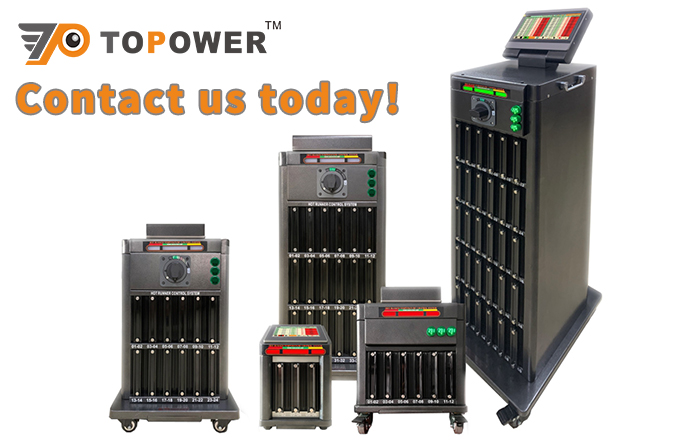
Common configurations:
6–12 zones
16 zones
24, 32, 48 zones
Up to 120 zones with expansion frames
Modular design allows easy expansion
Each zone is independently monitored
PLC Temperature Controllers
Technically unlimited scalability
Requires:
Additional I/O modules
Extended programming
Larger control cabinets
For most multi-zone hot runner molds, touch screen systems offer a more cost-effective and compact solution.
Diagnostics & Fault Detection
Touch Screen Controllers
Built-in diagnostics typically include:
Thermocouple open/reverse detection
Heater short or overload alarms
Zone deviation alarms
Start-up sequencing protection
These features are pre-configured for hot runner safety.
PLC Controllers
Diagnostics must be programmed manually
Offers flexibility, but higher engineering workload
More suitable for custom processes
Integration with Automation Systems
PLC Temperature Controllers
This is where PLC systems excel.
They integrate easily with:
Injection molding machines
Robots and conveyors
Central factory control systems
MES and Industry 4.0 platforms
Touch Screen Temperature Controllers
Limited integration (basic I/O or communication protocols)
Primarily designed as stand-alone hot runner control units
If full automation integration is a priority, PLC systems may be the better choice.
Cost Comparison: Initial and Long-Term
| Cost Factor | Touch Screen Controller | PLC Controller |
|---|---|---|
| Initial Hardware | Lower | Higher |
| Engineering Time | Minimal | High |
| Maintenance | Low | Medium |
| Training | Simple | Complex |
| Expansion Cost | Predictable | Variable |
For most molding operations, the total cost of ownership favors touch screen temperature controllers, especially when hot runner control is the primary requirement.
Typical Application Scenarios
When to Choose a Touch Screen Temperature Controller
Dedicated hot runner temperature control
Multi-zone molds (8–120 zones)
Fast deployment and mold changeovers
Limited automation engineering resources
When to Choose a PLC Temperature Controller
Fully automated production lines
Complex process logic beyond temperature control
Centralized factory control architecture
Custom integration requirements
Industry Trend: Dedicated Controllers vs Integrated PLC Systems
Despite the growth of smart factories, dedicated hot runner temperature controllers remain dominant in injection molding for one key reason:
They are engineered specifically for thermal control, not as a general-purpose automation tool.
Modern touch screen controllers now offer:
Data logging
Network connectivity
Remote diagnostics
Closing much of the gap with PLC-based solutions — without sacrificing simplicity.
Conclusion: Which Is Better for Multi-Zone Control?
There is no one-size-fits-all answer, but the decision becomes clear when priorities are defined:
For most hot runner multi-zone applications, → Touch screen temperature controllers offer better usability, faster setup, and lower total cost.
For highly automated, logic-heavy production systems → PLC temperature controllers provide unmatched flexibility.
Understanding your mold complexity, production environment, and long-term scalability goals is the key to making the right choice.